
Skip to content
NEURAX
Download

Features

Everything computed.Nothing guessed.

Will it fit?

Peak memory split into weights, activations, gradients and optimizer state, layer by layer, against the memory you actually have.
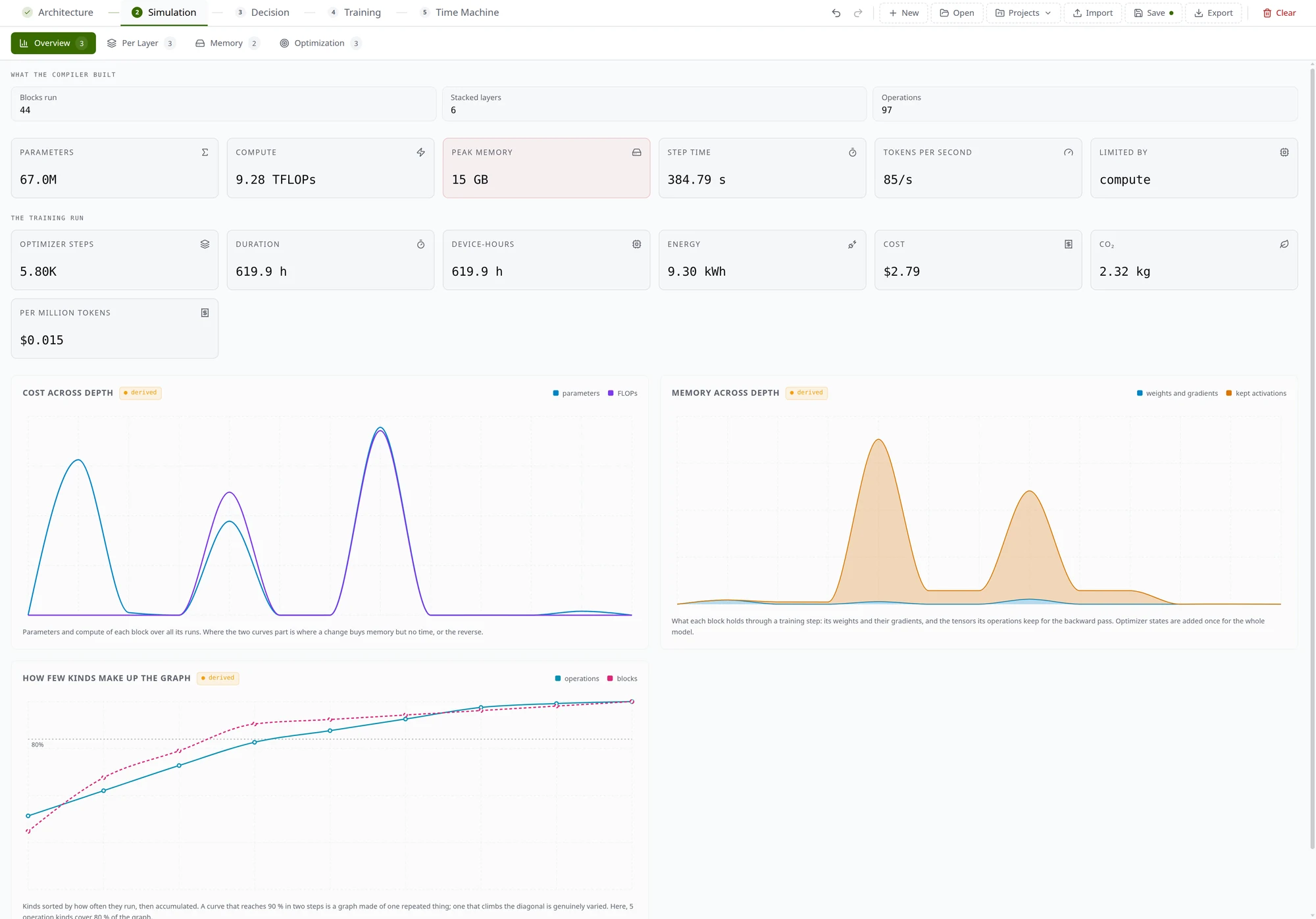
Simulation overview for DistilBERT-base on this laptop: 67.0M parameters, 9.28 TFLOPs, a 15 GB peak, a 5.80K-step training run costing $2.79, and the cost-across-depth, memory-across-depth and operation-kinds charts

What will it cost?

Training time, dollars, energy and CO₂ for the machine NEURAX detects, and a five-year projection with nominal, optimistic and pessimistic scenarios.
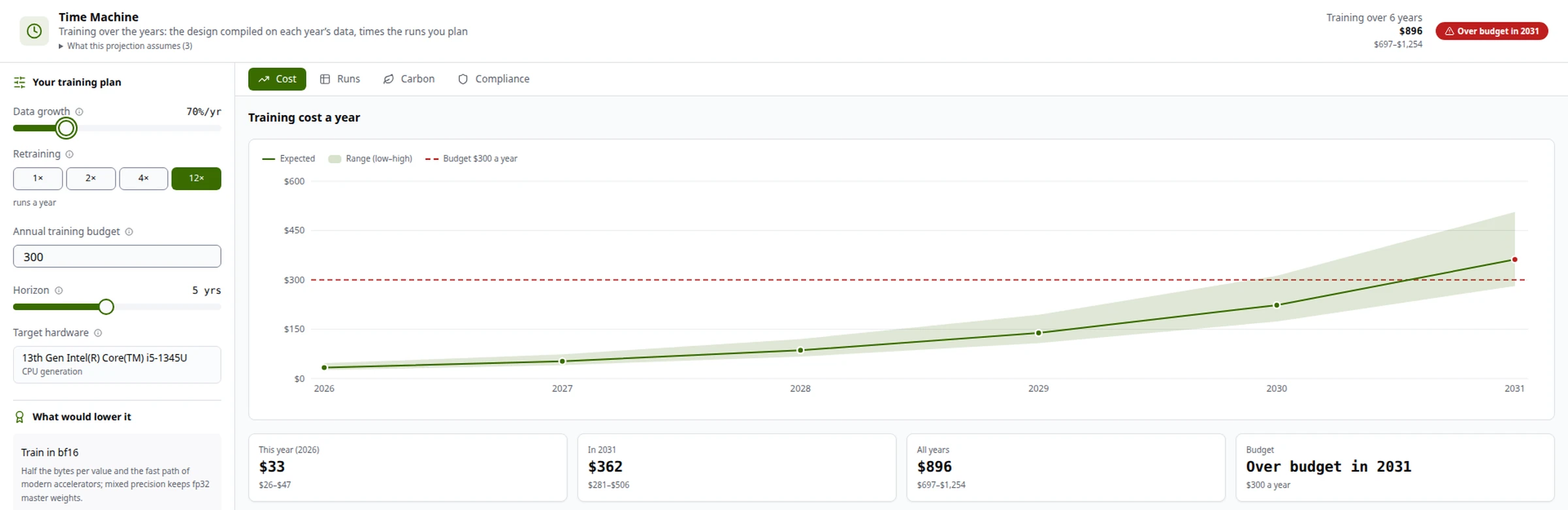
Time Machine cost projection for DistilBERT-base, trained 12 times a year on data growing 70% a year: $33 in 2026 rising to $362 in 2031, with its low–high range and a $300 yearly budget line that it crosses

An agent that works the studio for you

Describe the model in plain words and the NEURAX agent builds it on the canvas, runs the analysis, explains every figure and repairs what is wrong. It stops for one thing only: your approval before anything is trained.
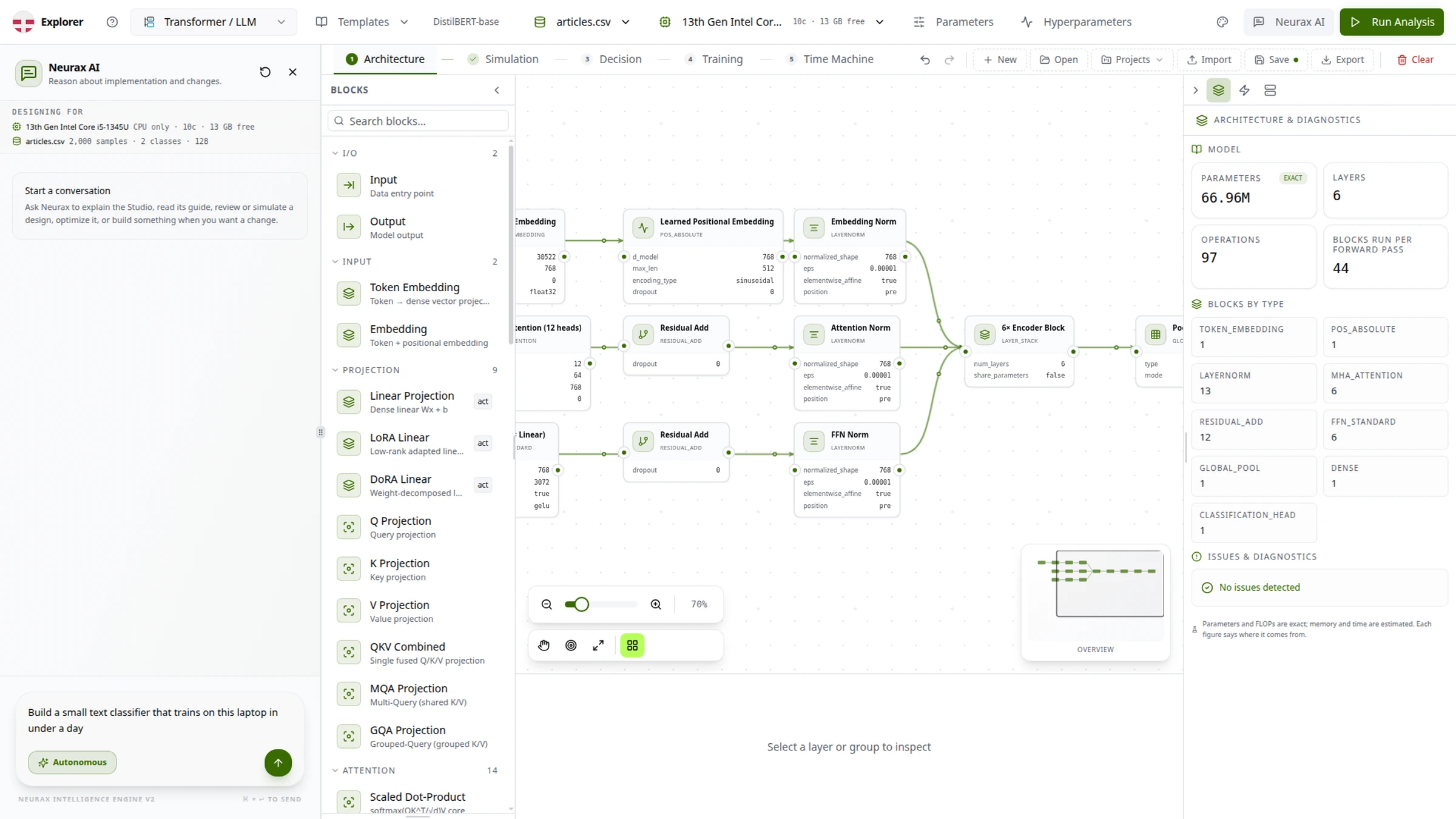
The Neurax AI panel open beside the canvas, listing the machine and dataset it designs for (a 10-core CPU, and articles.csv with 2,000 samples in 2 classes), with a request typed into its prompt box

Every major architecture family

Six families (transformers, mixture of experts, state space, convolutional, diffusion and graph networks) and 67 reference architectures built from their published configurations, from BERT to Mixtral to ResNet-50.
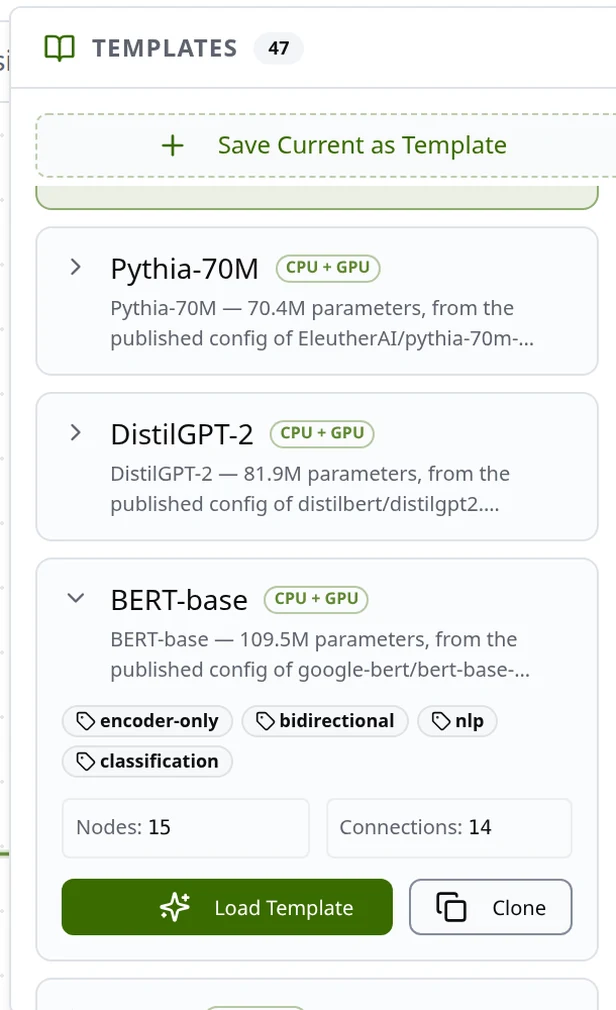
The Templates panel: reference models built from their published configs (Pythia-70M, DistilGPT-2, BERT-base), with node and connection counts and a Load Template button
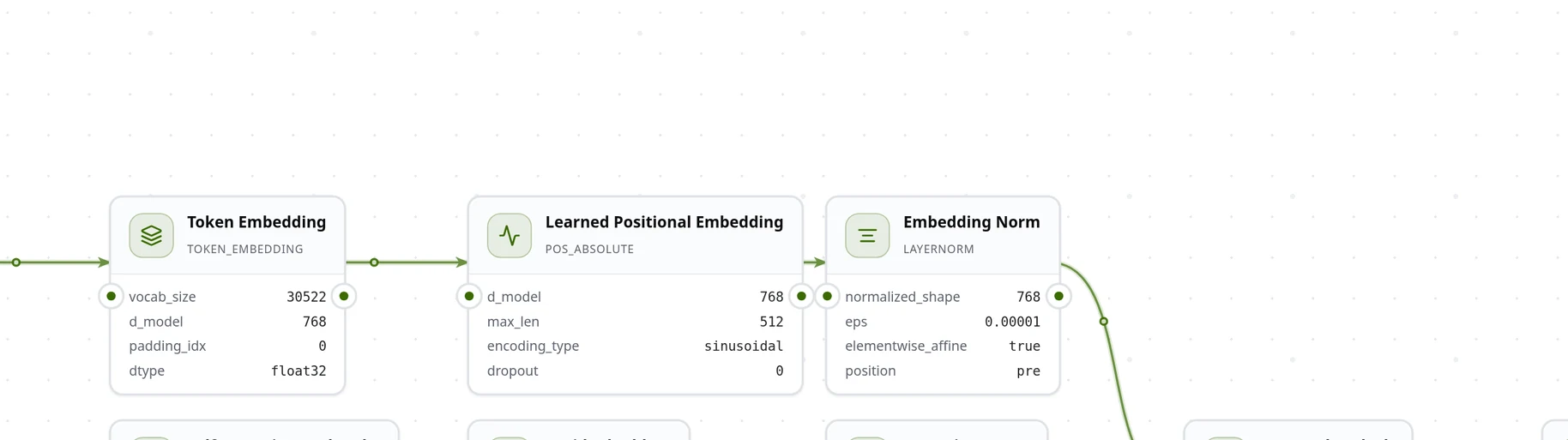
A row of DistilBERT-base blocks on the NEURAX canvas: token embedding, learned positional embedding, embedding norm, 12-head self-attention, residual add, attention norm and feed-forward

NEURAX helps you before, during and after training.

Before training

Know if it fits before you commit

Load a published model or draw your own. NEURAX reads the machine it will run on and tells you (before anything is spent) whether the design can train there, and what it commits you to.

DistilBERT-base · articles.csv · this laptop
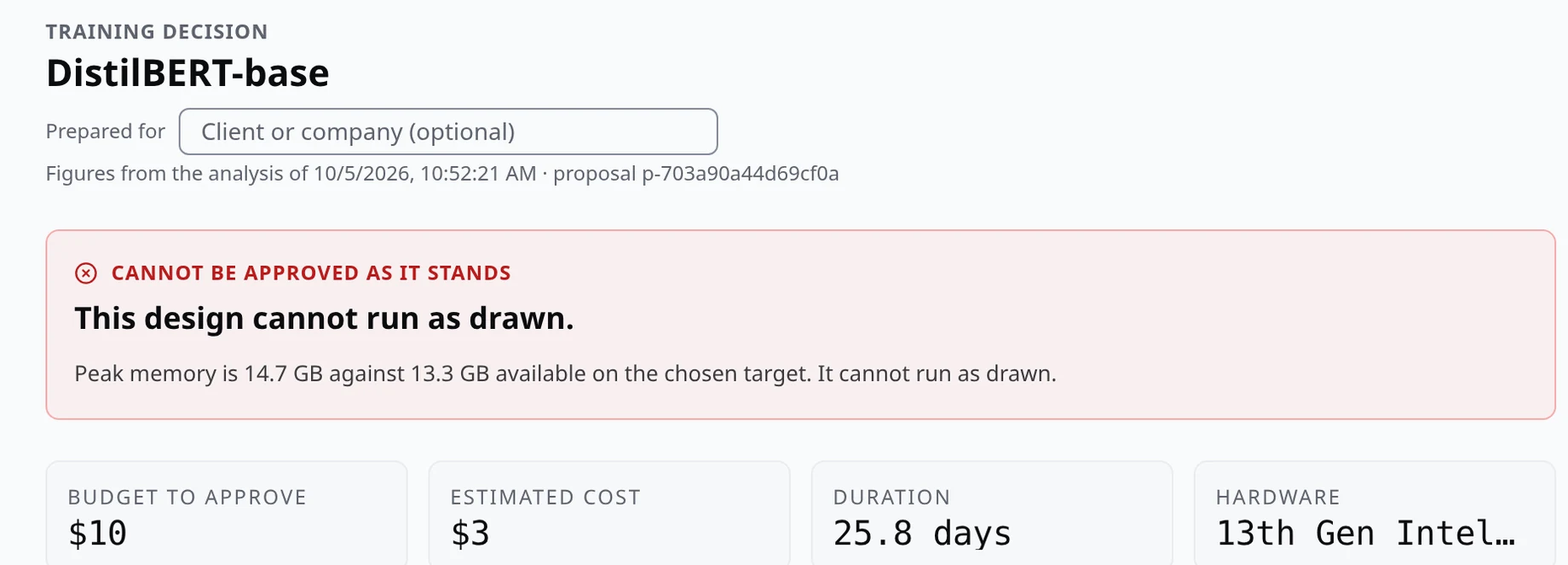
NEURAX Decision brief for DistilBERT-base: cannot be approved as it stands, with a peak of 14.7 GB against 13.3 GB available on the chosen target, next to a $10 proposed budget, a $3 estimated cost and 25.8 days

During training

Train the design you approved

NEURAX writes the PyTorch project straight from the canvas (model, training script, hyperparameters), checks it matches what was approved, then runs it on your machine with live loss and checkpoints.
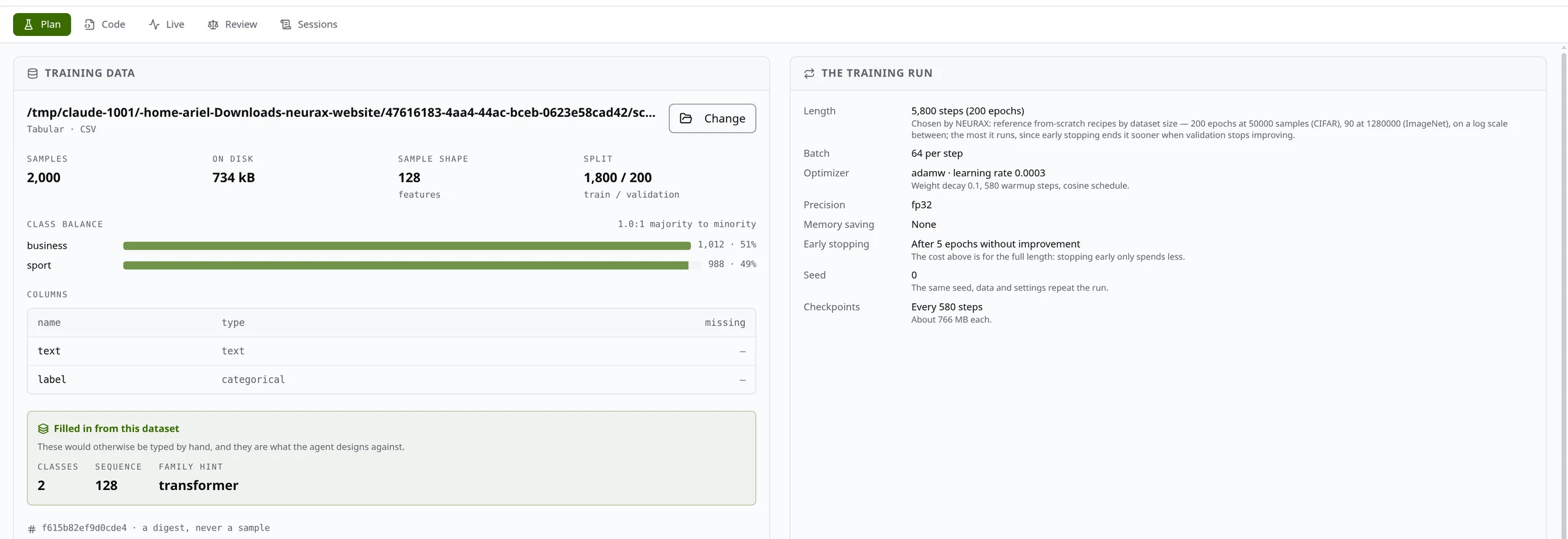
The Training plan for DistilBERT-base: the dataset profile (2,000 samples, two balanced classes, 1,800 for training and 200 for validation) beside the training run, and what it will cost: $3, 25.8 days, 9.3 kWh and 2.3 kg of CO₂

After training

See what it commits you to

Time Machine projects the cost of a model over the years ahead and tracks the regulation that applies to it (EU AI Act thresholds, carbon reporting) against the model you actually built.
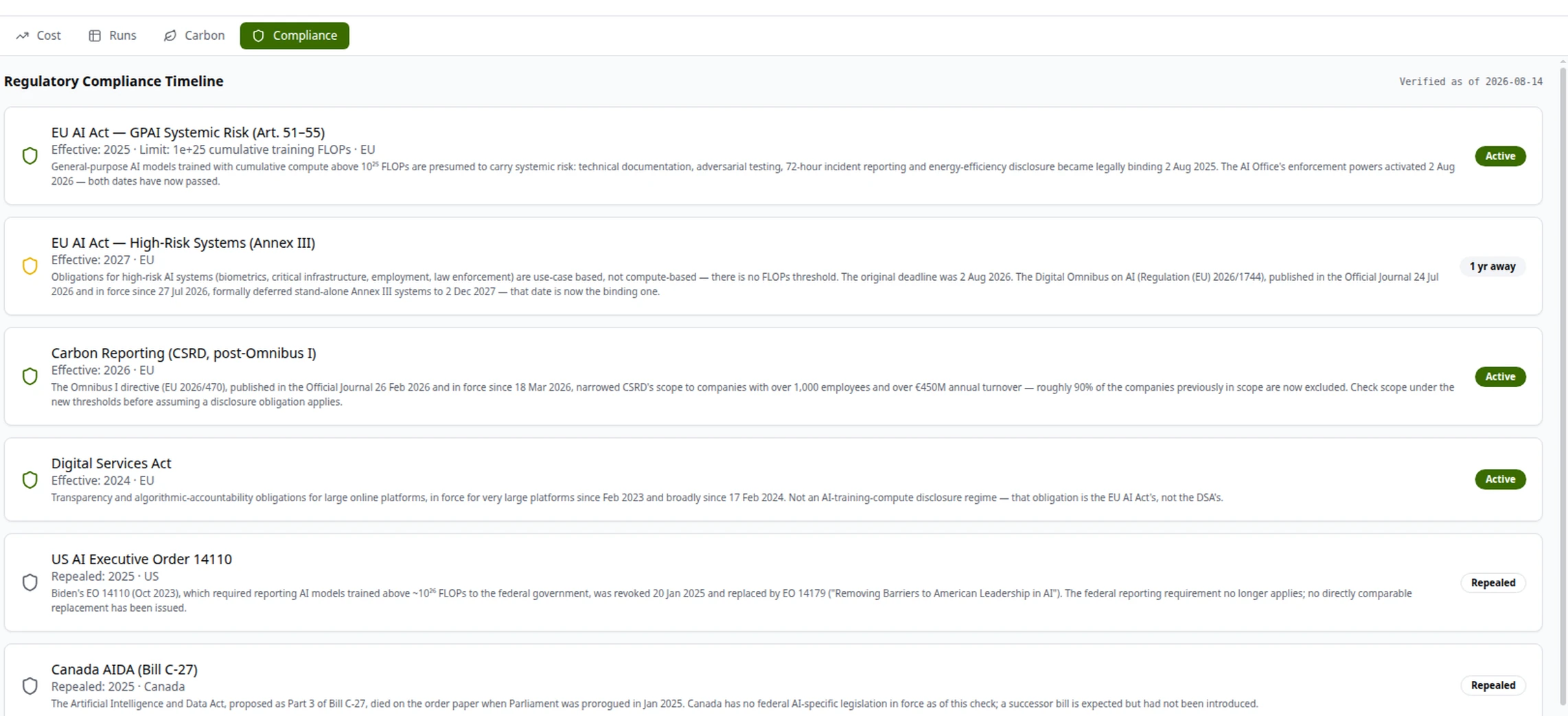
Time Machine's regulatory compliance timeline: EU AI Act obligations for general-purpose and high-risk systems, CSRD carbon reporting and other dated regulation, each marked active or upcoming

Communities we support

  • Rust Cameroon
  • Rust Africa